

Stop optimizing for being right
Stop asking if it's true. Start asking if it matters.

I spend way too much time trying to figure out what’s true. Not enough time asking what’s useful.
Here’s the thing: something can be completely, verifiably true and still be totally irrelevant to your life. An idea can be accurate and still do absolutely nothing for you. Worse than nothing, actually.
Because what doesn’t serve you doesn’t just sit there neutrally. It weighs you down.
I used to collect truths like they mattered. Universal principles. Insights that applied to everyone. The kind of wisdom you could pull out at dinner parties. I thought I was becoming smarter, more informed, more aware.
But I was really just accumulating someone else’s answers to someone else’s problems.
The trap is subtle. We’re taught to seek truth. To value facts. To base our decisions on what’s real and verified. And that sounds good, right? That sounds like exactly what a reasonable person should do.
Except we forget to ask the follow-up question: Is this true thing actually useful to me?
Not to humanity in general. Not to the majority. To me. In my specific life. With my specific challenges and goals and circumstances.
Truth feeds your ego. It makes you feel informed, intelligent, like you’ve got it figured out. You can point to studies and data and expert opinions. You can be right.
But in terms utility?
Utility builds your life. It moves you forward. It helps you create what you actually want to create.
I’ve noticed this pattern in myself. I’ll read something fascinating. Some psychological insight or business principle or philosophical framework. It’ll feel important. I’ll save it, highlight it, tell people about it.
And then months later I realize I never actually used it. It’s just sitting there in my mental filing cabinet, taking up space. A truth I’m carrying around for no reason.
Like photos on my phone of someone I used to be.
The question I’m learning to ask now is different. When I encounter new information, when someone gives me advice, when I learn some supposed universal principle, I don’t immediately ask “Is this true?”
I ask: “Does this help me progress? Does this serve what I’m building? Does this move me toward anything I actually care about?”
Most truth, for most people, most of the time, is just noise. It might be accurate noise. Well-researched noise. Peer-reviewed noise.
But if it doesn’t connect to your actual life, your actual mission, your actual next step, then what’s in it for you?
We chase truth when we should be chasing relevance. We accumulate knowledge when we should be cultivating discernment. We try to know everything when we should be laser-focused on knowing the few things that actually matter for where we’re going.
I spent years collecting perspectives I didn’t need. Opinions about industries I wasn’t in. Strategies for problems I didn’t have. All true. All useless.
All that true but useless information didn’t just do nothing. It created mental clutter. It made me second-guess things that were working. It pulled my attention in twenty different directions.
What doesn’t serve you has a negative impact, not a neutral one.
I’m not saying truth doesn’t matter. I’m saying truth without context is just trivia. And context means asking: useful for what? Useful for whom? Useful when?
The next time you’re about to dive deep into some topic, some debate, some question about what’s real and what isn’t, pause.
Ask yourself if you’re seeking truth or seeking something that will actually help you build the life you want.
Because those are not the same thing.
And one of them will set you free while the other will just give you more to carry.
I spend way too much time trying to figure out what’s true. Not enough time asking what’s useful.
Here’s the thing: something can be completely, verifiably true and still be totally irrelevant to your life. An idea can be accurate and still do absolutely nothing for you. Worse than nothing, actually.
Because what doesn’t serve you doesn’t just sit there neutrally. It weighs you down.
I used to collect truths like they mattered. Universal principles. Insights that applied to everyone. The kind of wisdom you could pull out at dinner parties. I thought I was becoming smarter, more informed, more aware.
But I was really just accumulating someone else’s answers to someone else’s problems.
The trap is rather subtle. We’re taught to seek truth. To value facts. To base our decisions on what’s real and verified. And that sounds good, right? That sounds like exactly what a reasonable person should do.
Except we forget to ask the follow-up question: Is this true thing actually useful to me?
Not to humanity in general. Not to the majority. To me. In my specific life. With my specific challenges and goals and circumstances.
Truth feeds your ego. It makes you feel informed, intelligent, like you’ve got it figured out. You can point to studies and data and expert opinions. You can be right.
But utility?
Utility builds your life. It moves you forward. It helps you create what you actually want to create.
I’ve noticed this pattern in myself. I’ll read something fascinating. Some psychological insight or business principle or philosophical framework. It’ll feel important. I’ll save it, highlight it, tell people about it.
And then months later I realize I never actually used it. It’s just sitting there in my mental filing cabinet, taking up space. A truth I’m carrying around for no reason.
Like photos on my phone of someone I used to be.
The question I’m learning to ask now is different. When I encounter new information, when someone gives me advice, when I learn some supposed universal principle, I don’t immediately ask “Is this true?”
I ask: “Does this help me progress? Does this serve what I’m building? Does this move me toward anything I actually care about?”
Most truth, for most people, most of the time, is just noise. It might be good noise. Well-researched noise. Peer-reviewed noise.
But if it doesn’t connect to your actual life, your actual mission, your actual next step, then what’s it doing for you?
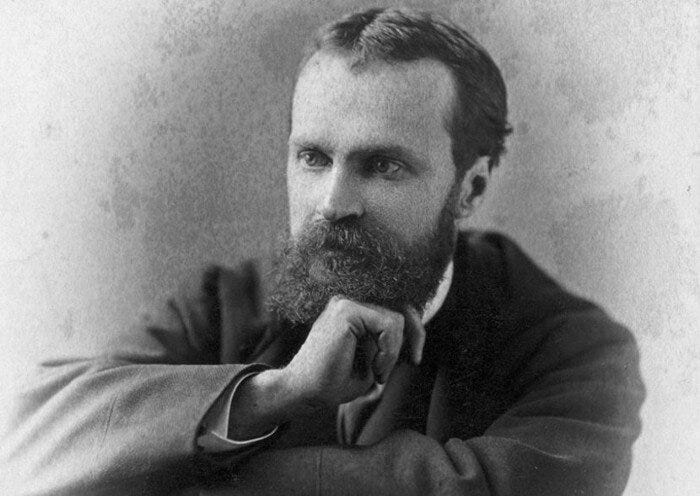
William James understood this a century before I did.
He thought about truth in an almost embarrassingly practical way. Not as some shiny object but as a tool. An instrument. Something that earns the right to be called “true” by what it does practically, not how elegant it looks on a page.
True ideas, for James, are the ones we can actually use. Assimilate. Validate. Corroborate. Verify.
He asked a question that slices right through intellectual vanity: If we grant that a belief is true, what concrete difference does that make in anyone’s actual life?
If the answer is “none,” he thought the whole debate is basically idle noise. Two sides arguing over labels on an idea that changes nothing for anybody.
If swapping one “truth” for another doesn’t alter how we navigate our days, those alternatives “mean practically the same thing.”
His words, not mine.
For James, truth and usefulness were not enemies. They were almost two names for the same process seen from different angles. You can say an idea is “useful because it’s true” or “true because it’s useful” and you’re really pointing at the same thing: a belief that keeps proving itself in experience, that survives contact with reality, that helps a human being move better through their own life.
That’s the part that really lands for me.
I used to treat truth like a museum art piece. Something to admire, quote, and protect. James treats it like a tool belt.
If a belief never gets picked up, never gets worn down by use, never changes the way you choose, then for all practical purposes it might as well not exist. Not because it’s logically wrong, but because it’s existentially inert and stagnant.
It doesn’t do anything.
And we love ideas that don’t do anything.
They’re safe. They don’t demand change. They don’t expose us to risk or failure. We can hold them at a distance, turn them over in our minds, debate their finer points with other people who also aren’t doing anything with them.
We mistake this for intellectual rigor. For being well-informed. For caring about getting it right.
But really it’s just a fancy form of procrastination.
I’ve done this with books. With frameworks, and entire fields of study.
I’ll spend weeks absorbing some new way of thinking. I’ll understand it thoroughly. I’ll even be able to explain it to others. And then I’ll do exactly nothing with it.
Because understanding something and applying something are two completely different disciplines.
One makes you feel smart. The other makes you smart.
(if we define “smart” as how quickly you change your behavior when encountering the same conditions)
Most of us optimize for the former while claiming we want the latter.
James William understood this.
He wasn’t interested in whether an idea could win an argument. He wanted to know if it could win in life. If it could help someone navigate a marriage, build a business, endure a loss, make a choice they’d been avoiding.
The test wasn’t logical consistency. It was lived consequence.
Does this belief change what you do tomorrow morning? Does it shift how you treat the person in front of you? Does it give you access to courage or clarity or compassion you didn’t have before?
If not, then what are we even talking about?
I think about the hours I’ve spent in conversations where everyone involved was technically correct and everyone walked away exactly the same. No one’s life improved. No one made a different choice. We just confirmed what we already believed and felt validated.
I call it hoarding truths.
Hoarding truths makes you slower.
Every idea you carry that doesn’t serve a purpose is friction. It’s one more thing your mind has to sort through when you’re trying to make a decision or solve a problem.
You think you’re building a knowledge base when you’re actually building a mental labyrinth.
I’ve watched this happen in real time. Someone asks me a question. Instead of drawing on what I know that’s relevant, I find myself sifting through thirty tangentially related concepts I’ve collected over the years. I’m pulling up exceptions and counter-arguments and alternative frameworks, none of which actually help answer the question.
I’ve confused having a lot of information with having useful information.
And that confusion is expensive.
Think: Cash-value test.
What’s the cash value of this idea? Practically. Where does it actually touch down in your life?
If I believe in personal responsibility, how does that change my response when something goes wrong? If I believe in compound growth, what decision am I making differently today? If I believe people are fundamentally good, how does that show up in how I talk to people, how I trust, how I give second chances?
Because if I claim to believe something but it never translates into action, then I don’t actually believe it. I’m just carrying it around. Performing belief.
And the gap between what we say we believe and what our choices reveal we believe is where most of our suffering lives.
Maybe that’s the real change.
From asking “What’s true?” to asking “What’s true for me, right now, in service of where I’m going?”
Not relativism. Not subjectivity for its own sake. Just honesty about the fact that not every true thing deserves my attention.
Some truths are for other people. Some are for other phases of life. Some are just interesting but irrelevant.
And learning to let those go, to stop collecting them, stop defending them, stop letting them take up free residence in my head is one of the most clarifying practices I’ve found.
James William died in 1910.
But the question he left behind is more urgent now than it’s ever been. We’re drowning in information. Buried in our phones. Overwhelmed by access to every position on every issue humanity has ever debated.
And none of that abundance makes us wiser unless we learn to ask: Of all these true things, which ones actually matter to the life I’m trying to build?
Because the life you’re trying to build doesn’t need every truth.
It needs the handful of truths that are yours. That fit in the palm of your hand. That you’ll actually pick up and use.
The rest is just weight.
And at some point, you have to decide: Are you here to be right, or are you here to improve?
A final note:
Now I’m turning the question back to you.
Is reading this letter just noise?
Or are you actually applying it?
What decision are you going to make differently because you read this? What belief are you going to stop carrying? What question are you going to start asking?
If the answer is “nothing” then I just added to your mental clutter. You spent a few minutes here, nodded along, maybe even highlighted a few lines. And then you’ll go collect more ideas you won’t use.
That would make me part of the problem I’m describing.
So before you close this tab, before you move on to the next thing in your feed, ask yourself: Does this serve where I’m going, or am I just accumulating again?
If it serves you, use it. If it doesn’t, let it go.
Don’t carry it just because it sounded good.
“Grant an idea or belief to be true, what concrete difference will its being true make in anyone’s actual life? How will the truth be realized?”
William James
I love this..."Stop asking if it's true. Start asking if it matters" or even relevant to me? Thank you for sharing...
I love this. Makes me have an even deeper appreciation for education and learning. Always loved school, but it hit deeper into college with the opportunity to study things that interested me and my path. Great piece.